
Lab testing
How to read a certificate of analysis
Learn which details connect a laboratory report to a sample—and why a percentage alone is not the whole story.
Learn how to read analytical documentation, distinguish identity from purity, and keep results connected to the material tested.
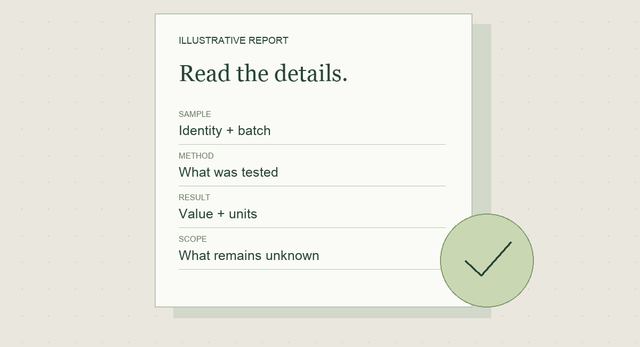
A complete interpretation needs more than a headline purity number. The method, sample identity and reporting basis are part of the result.
A separation method that produces a detector response over time. A percentage needs a stated basis.
Information about ions and their mass-to-charge ratios can support identity assessment.
A COA should relate the reported tests to the relevant sample or lot. It does not answer every safety question.
Learn which details connect a laboratory report to a sample—and why a percentage alone is not the whole story.
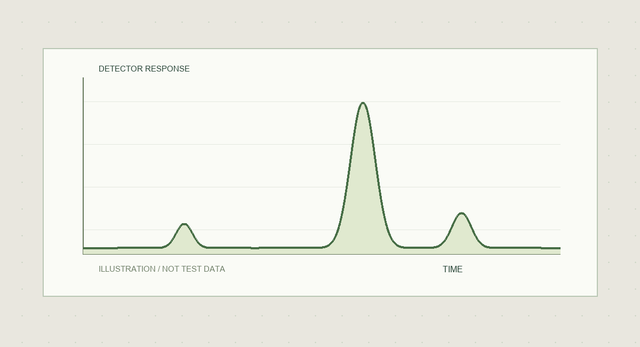
Two complementary analytical approaches—and the important difference between separation, identification and quantity.
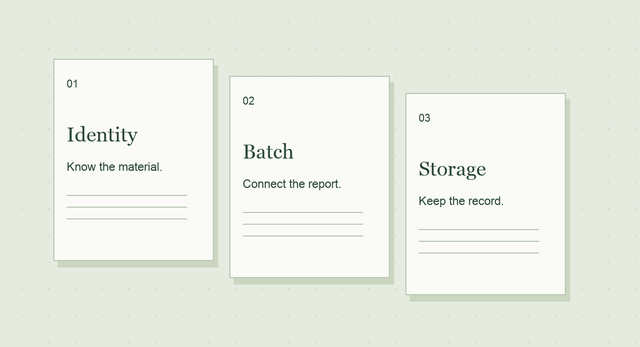
A documentation-first approach to supplier assessment, research-use-only language and laboratory storage records.